
Alternative Proteins


Key Takeaways from Roundtable on Feeding Change to Drive Protein Diversification
Discover the practical actions companies, investors and policymakers can take to accelerate the protein transition. Drawing on insights from FAIRR's latest stakeholder roundtable, explore how addressing taste, trust and scale can unlock consumer adoption and build more resilient food systems.
Learn moreTheme Overview
The climate crisis, coupled with global food and nutritional security concerns, has positioned alternative proteins as a vital solution. At the outset, alternative proteins (plant-based, fermentation and cultivated technologies) are less resource-intensive compared to their conventional animal protein counterparts. Nearly 14.5% of global GHG emissions are attributed to livestock production. The sector is also the number one cause of deforestation due to cattle ranching and soy production, a significant driver of water scarcity and pollution risks and the largest user of antibiotics. Alternative proteins can and should play a role in mitigating the environmental impacts of the global demand for protein.
The FAIRR Initiative engages key players in the food sector to support and enable a dietary transition in line with planetary boundaries, and is working to evaluate the sustainability of novel technologies.
Latest Activity
Roundtable Takeaways | Feeding Change to Drive Protein Diversification
Explore the key takeaways from FAIRR's latest stakeholder roundtable on accelerating the protein transition. Discover how companies, investors and policymakers can address barriers around taste, trust and scale to drive consumer adoption and build more resilient food systems.
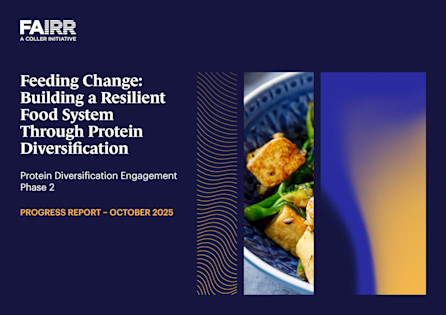
Report Launch: Protein Diversification Engagement Phase 2 Progress Report
Explore key outcomes from the second year of FAIRR´s engagement, which assesses how 12 of the food retailers and 8 brand manufacturers are using protein diversification as a tool to mitigate climate, nature and health risks and build business resilience.
New Insight | Dietary Guidelines: A Market Signal for Food Companies and Investors
FAIRR's new Insight delves into how evolving dietary guidelines can reshape national health priorities and redirect capital flows. As protein recommendations grow, plant-based protein diversification can help companies and investors manage risks, seize opportunities, and strengthen long-term resilience.
New Insight | The Planetary Health Diet Revisited: How Companies Can Enable a Protein Transition
The EAT-Lancet Commission’s second report highlights the importance of diets in delivering positive health and environmental outcomes. FAIRR’s Insight explores how the recommendations align with the findings of its Protein Diversification engagement.
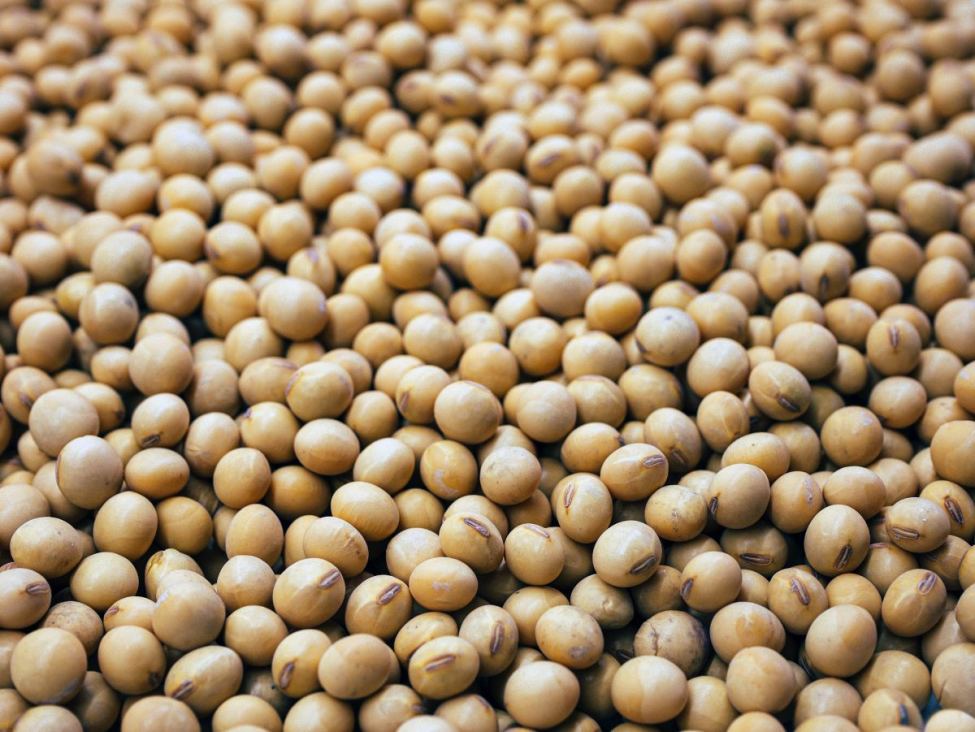
New Insight: Could China’s Soy Policy Changes Drive a Sustainable Agricultural Transformation?
China's policy to reduce soybean meal in livestock feed is reshaping agriculture and creating new investment opportunities. This insight explores how innovative feeding strategies are driving sustainability and reducing deforestation.
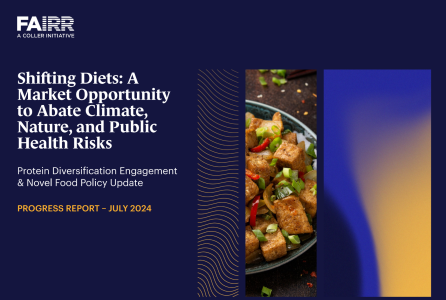
New Insight: Protein Diversification: A Tool to Address Climate, Nature, and Public Health Risks'
The overconsumption of animal protein in Western geographies is leading to adverse impacts on climate, nature, and human health. FAIRR’s new insight piece explores how transitioning to the consumption of plant-based proteins can address these three impacts.
Protein Diversification Engagement Phase 2
Explore key findings from the second year of FAIRR’s Protein Diversification engagement, which assesses how 12 of the largest food retailers and 8 brand manufacturers are using protein diversification as a tool to mitigate risks from animal protein supply chains and build business resilience.
View report