
Coller FAIRR Seafood Index
Methodology Overview
The Coller FAIRR Seafood Index has been designed to drive change within the seafood sector by identifying leading practices and corporate leadership and areas for improvement among companies, with the aim of strengthening the resilience of global food systems and mitigating the risks associated with intensive carnivorous aquaculture.
Assessing risks and opportunities
Companies are benchmarked based on their scores across 16 topics. These topics have been selected because they capture the most financially material risks and opportunities relevant for seafood producers.
Failure to appropriately assess, monitor and manage these topics can expose companies to several risks in their operations and supply chains:
Strategic risks: loss of market share, impacted business operations
Regulatory risks: financial payments and/or penalties related to legal or regulatory actions
Operational efficiency risks: financial losses, delays, lower production rates or rising costs
Human capital risks: productivity declines, workforce attraction, development, retention and motivation issues
Reputational risks: increased consumer scrutiny, loss of social licence related to illegal fishing, poor animal welfare or lack of sustainability
Scoring companies

Coverage
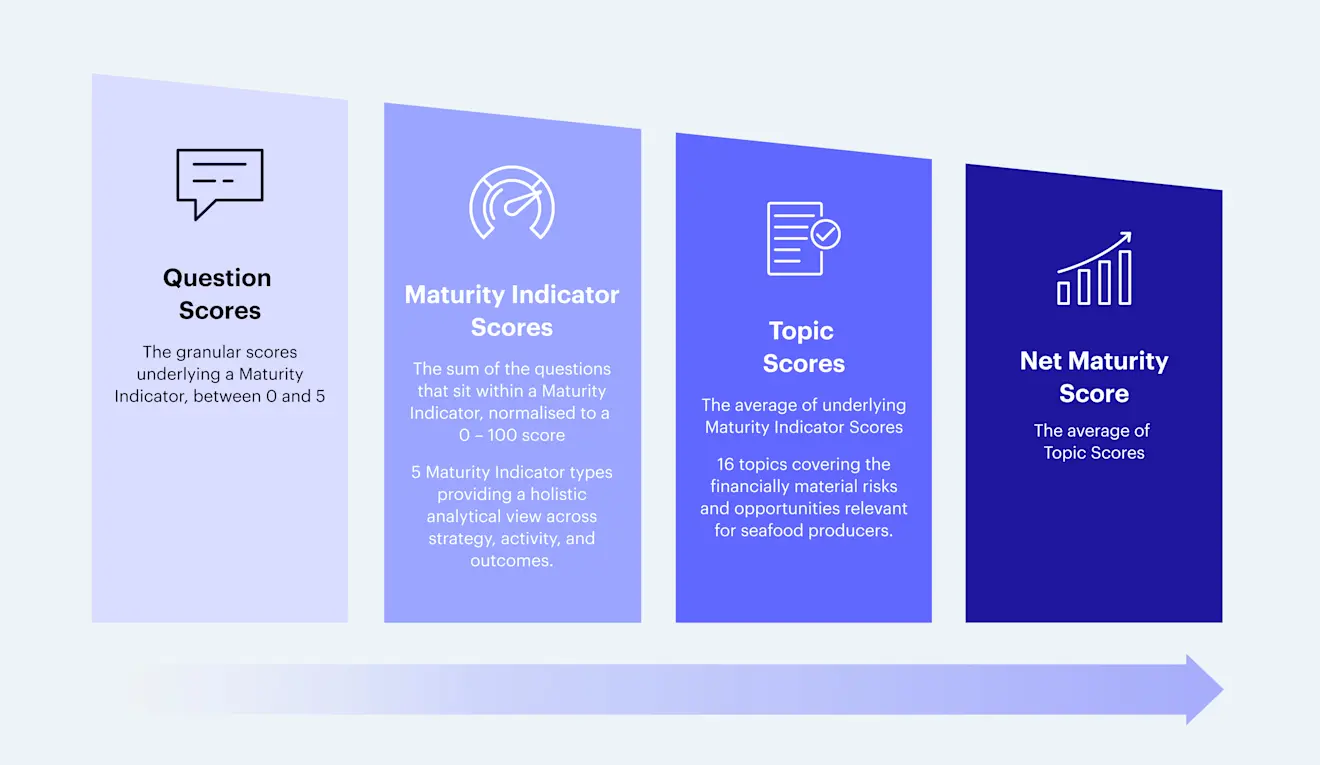
Each of the 16 topics is further broken down into five Maturity Indicators, which cover risk assessments, policies, targets, strategy implementation and outcome metrics.

Focus
The Maturity Indicators include granular questions and responses that provide a holistic analytical view that covers a company’s strategy, activities, and outcome metrics.

Approach
Companies are only asked questions that are relevant to how and where they operate within seafood value chains, in terms of sourcing, production, and processing.

Output
Companies are given a Net Maturity Score, ranging from 0 to 100, which has been generated using aggregated scores across three levels – questions, maturity indicators and topics.
Information collection
The Coller FAIRR Seafood Index does not use any confidential information in its data collection and scoring activities. While FAIRR uses artificial intelligence tools to gather research on companies, this information is systematically reviewed by analysts and must always be traceable to a public source of information. The sources of the data used include:
Corporate reporting:
information from sustainability reports, annual reports, 10k forms, policies, codes of conduct, collective bargaining agreements etc;Third-party sources:
information from reputable and verifiable open-source data providers, news and media information providers, and other sector or thematic-specific information providers.Want to know more?
To understand the terms used in the Seafood Index, visit the Glossary page.
For more information on how this index has been developed and the underlying data supporting it, download the Coller FAIRR Seafood Index Methodology and data set.