
Coller FAIRR Seafood Index
About the Seafood Index
The Coller FAIRR Seafood Index assesses 20 of the largest seafood and aquaculture companies on the material risks and opportunities that challenge and drive the long-term sustainability of the sector. Investors, companies and other stakeholders can use the index to better understand the exposure seafood companies have to these and - ultimately - support improved food system resilience through corporate change.
Why use the Seafood Index
Rising consumer demand, overfishing, increased regulatory scrutiny and supply chain disruption are elevating the risks associated with current models of seafood production. The imperative to explore innovative solutions that deliver environmental, social and financial benefits is also becoming more urgent.
The Seafood Index provides investors, companies and other stakeholders with specific insights and granular data points that can further their understanding of how prepared companies are to respond to these risks and opportunities.
20
Companies Assessed16
Topics75
Maturity Indicators391
Core Questions1590
Underlying Data PointsWhat are the risks and opportunities in seafood production
Seafood production – both wild-caught and farmed – generates a range of unique material risks, including pollution and ecosystem degradation, unsustainable feed sourcing, insufficient traceability and poor animal welfare practices. These risks pose significant threats to the environmental sustainability and long-term viability of the industry
But seafood producers can also benefit from innovation. Practices such as regenerative aquaculture and the cultivation of low-impact, unfed species (e.g. mussels) offer scalable solutions that support healthier marine ecosystems while addressing food security.
To learn more about the material risks and opportunities facing seafood producers, and the 16 topics that capture these, watch the video below.
What the Seafood Index covers
The Seafood Index aims to reflect the maturity of seafood companies’ strategies to address financially material risks and opportunities.
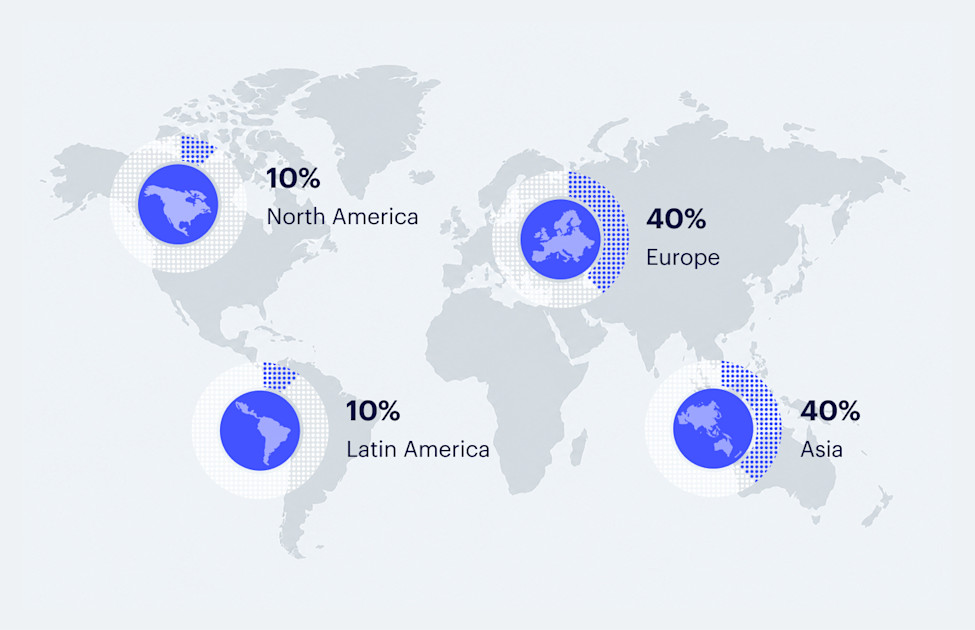
The 20 seafood and aquaculture companies have been selected based on their float-adjusted market capitalisation, revenues and operations across wild capture and aquaculture facilities, feed manufacture and primary processing, trading, or retail of fish and seafood. Company headquarters span Asia Pacific, Europe, North and Latin America and operate globally.
Eleven of these companies were previously included in the Coller FAIRR Protein Producer Index – they will now only be included in the Seafood Index. Their historical assessments remain available to FAIRR investor members on the Protein Producer Index webpage. To understand how these companies have progressed, please download the comparative table.
How companies are benchmarked
Companies are benchmarked based on their scores across three levels – questions, maturity indicators and topics. Each level is aggregated upwards to generate a net maturity score, ranging from 0 to 100.
Most scores reflect how prepared a company is to manage financial material risks, while some focus on the potential upside it could benefit from by adopting leading practices and positioning itself as a sector innovator.
Importantly, the Seafood Index assesses the maturity of a company’s strategic response to these risks and opportunities, with outcome metrics reflecting real-world improvements. This approach is captured in the following indicators:
Risk/opportunity assessments
Policies
Targets
Implementation
Outcome metrics
More information on the construction, scoring approach and information collection of the benchmark can be found on the Seafood Index Methodology page.
Who can use the Seafood Index
The Seafood Index is a practical tool designed to support a wide range of stakeholders – from investors and seafood companies to civil society – in understanding and addressing financially material sustainability risks within the global seafood sector.
For investors
The Seafood Index provides actionable insights to support investment decision-making and engagement strategies. Investors can:
integrate Seafood Index scores and data into sustainability analysis, portfolio construction and risk management;
use the Seafood Index to inform bilateral engagement with seafood companies on key sustainability issues; and
identify opportunities to participate in FAIRR’s investor engagements.
For seafood companies
The Seafood Index offers a clear view of current industry practices, helping companies benchmark their performance and identify areas for improvement. Companies can:
compare their maturity levels against peers and industry leaders;
learn from leading practices across the sector; and
engage with FAIRR to better understand their benchmark assessment.
For civil society and other stakeholders
The Seafood Index enhances transparency across the sector, enabling more informed advocacy and engagement. Stakeholders can:
gain insight into how leading seafood companies are managing environmental and social risks; and
use the findings to support dialogue and accountability efforts with companies or investors.

Company Ranking
The Coller FAIRR Seafood Index assesses 20 of the largest seafood and aquaculture companies on the material risks and opportunities that challenge and drive the long-term sustainability of the industry.
View Company Ranking