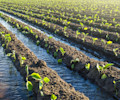
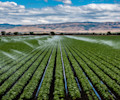
Undervalued and overconsumed, the world is facing a water crisis, and the agri-food sector, as one of the largest consumers of freshwater, is at its core.
Water and freshwater ecosystems support an estimated US$58 trillion in economic value (equivalent to 60% of global GDP), which is increasingly under threat due to heightened water pollution and scarcity.
Earlier this year, the UN warned that the world was entering an era of “global water bankruptcy”, with supply shortfalls estimated to reach 40% by 2030. Global food security is also at risk. Nearly two-thirds of the world's irrigated agriculture already faces high water stress (defined as demand for water resources exceeding 40% of supply), particularly crops such as sugarcane, wheat, rice and maize.
For companies and investors in the protein value chain, water scarcity and pollution present significant operational, legal and reputational challenges, threatening economic stability, food security and long-term investment returns.
This World Water Day marks the start of a pivotal year for water, in which investors can take a central role engaging with the agri-food sector to build water resilience for communities, companies and countries.
The importance of valuing water risks
Developing water resilience and establishing the costs of water scarcity and pollution across the value chain are intertwined. Understanding the financial materiality of water is critical to ensuring that water resources are managed effectively today and, in the future, aligning with the needs of society and the environment.
In 2024, the Global Commission on the Economics of Water, an expert body convened by the OECD and the government of the Netherlands, called for a rethink of how water is governed, priced, and stewarded based on the value it provides to society. This value should reflect its financial worth and social and cultural importance while also accounting for externalities such as pollution and ecosystem degradation.
Undervaluing water risks could undermine future food security, especially as agriculture is responsible for 70% of global withdrawals. In the coming decade, global demand for animal-sourced foods is projected to see a 6% increase, while the resources needed to grow these foods will become increasingly scarce.
The Global Commission has already called for a food system transformation to underpin food security in the years ahead, while acknowledging the challenges posed by distorted agricultural subsidies and incentives that encourage the mismanagement of water and contribute to its under-pricing.
Assessing the financial materiality of water risks in the food sector
As water scarcity intensifies, guidance is needed on how companies can measure and disclose the materiality of water in their own operations and supply chains.
Livestock companies and their suppliers face challenges in assessing water risks due to their complex supply chains and limited data availability.
FAIRR’s Investor Primer on Water Insecurity, published last year, found that only one of 52 major livestock companies had disclosed the percentage of feed sources that came from water-stressed areas, for example.
Even when livestock companies disclose their exposure to water stress across their supply chains, estimating the financial cost to a company is difficult. Without a true picture of how value chain costs depend on water availability or pollution levels, livestock companies and their investors have no way of knowing the extent of their risk exposure.
Forthcoming FAIRR research will look at how the financial costs of water sunk into grain production and livestock rearing increase as water resources become less available, today and in the future.
Systemic water insecurity amplifies financial risks
Achieving food security requires careful management of several environmental and social risks. Research by Chatham House demonstrates how an emphasis on producing more food to lower its costs has exacerbated biodiversity loss and climate change, which in turn threaten food availability and affordability.
Similarly, water insecurity connects and amplifies other investment risks in the agri-food sector, many of which are undervalued by companies and investors.
For instance, chronic or acute water stress, driven by overconsumption or drought, can increase the concentration of antibiotics in farm water. This can lead to the development of antimicrobial-resistant bacteria, as FAIRR highlights in An Investor’s Guide to Antimicrobial Resistance.
Water scarcity also amplifies the negative effects of wastewater and pollution, with agricultural run-offs contaminating freshwater reserves, and exacerbating ecosystem degradation. The contamination of freshwater resources can interrupt business operations and expose companies to regulatory and reputational risks, eroding asset and company values.
FAIRR’s Waste and Pollution Engagement asked 10 pork and poultry producers and two fertiliser companies to assess their animal waste management and fertiliser use and reduce their water quality and biodiversity impacts. While 83% of the companies engaged have assessed their operational water quality risks, only one of those companies disclosed targets to mitigate this pollution at high-risk sites.
Investor action to foster resilience in food and agriculture
To better understand and mitigate their portfolio exposure to water scarcity, pollution and other water-related risks, investors can take several actions:
Foster a culture of disclosure by encouraging companies to identify, assess, manage, and disclose water-related risks and opportunities, enabling better, more comparable and decision-useful data for investors.
Engage with companies to set ambitious time-bound commitments (or targets) for water resilience across their value chains.
Identify and assess opportunities to scale investments for water resilience, through technology-based solutions focused on water efficiency, recycling and resource recovery, and through nature-based solutions such as watershed protection and wetland restoration.
Monitor and actively participate in policy discussions to promote and incentivise governance and transformation of food systems that better value key resources such as water.
Investments focused on water resilience and sustainable agriculture can generate returns and co-benefits for economic prosperity and emissions reductions, while addressing the interconnected drivers of water scarcity, biodiversity loss, and climate risk.
Securing water, strengthening portfolios
From World Water Day in March to the UN Water Conference set to take place in December, policymakers are channelling attention to the value of water.
These discussions are critical to assess the financial materiality of water to companies and investors working on food system transformation and rely on the participation of all stakeholders.
Investors who become early movers on water resilience are well-placed to support long-term financial resilience across their portfolios and the broader agri-food sector.
FAIRR insights are written by FAIRR team members and occasionally co-authored with guest contributors. The authors write in their individual capacity and do not necessarily represent the FAIRR view.
Written by

Research Manager

Climate and Nature Economist

Technical Specialist, Climate and Nature