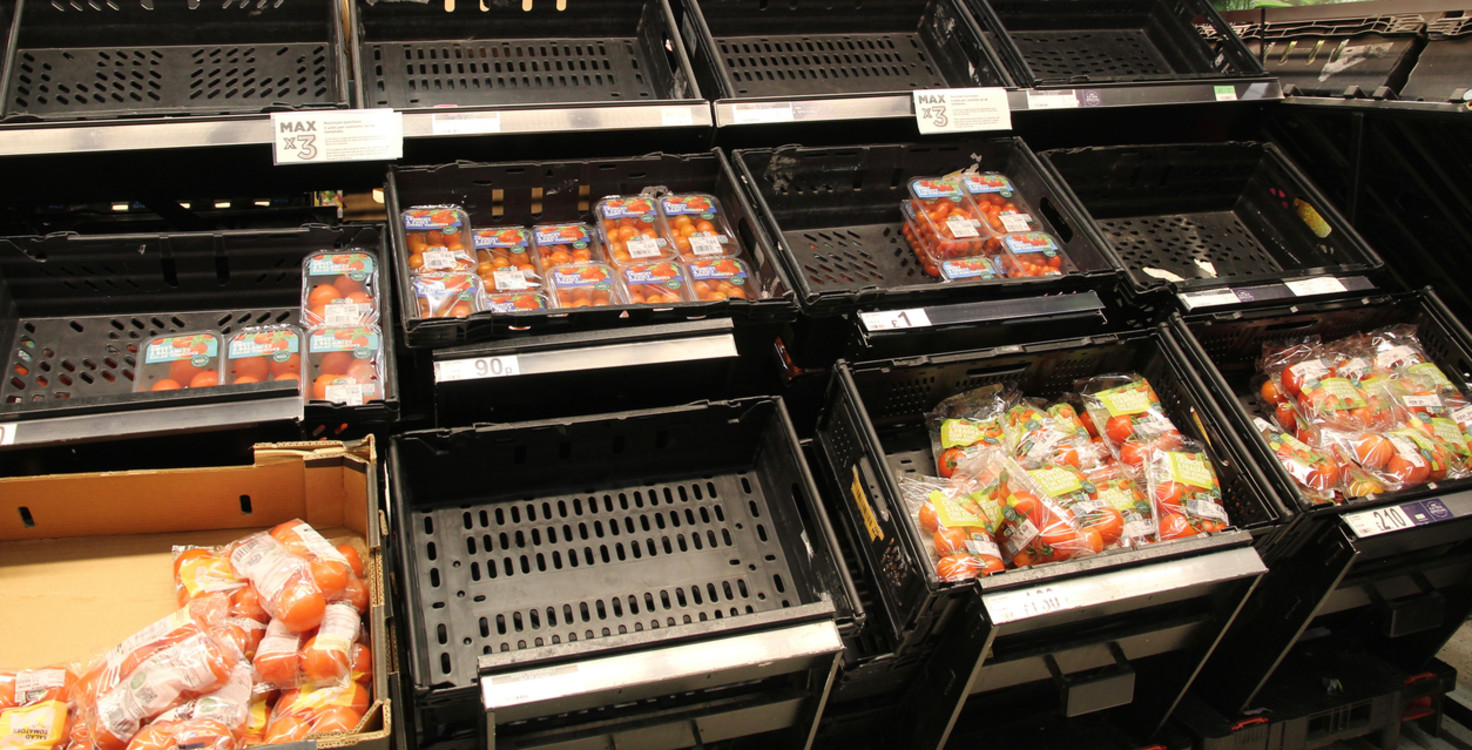
In recent years, rising geopolitical tensions and global security risks have turned attention towards short-term threats to food security – such as the tensions in the Strait of Hormuz, which have left fertiliser shipments stranded. At the same time, these developments have sharpened focus on a broader set of factors that influence long‑term stability. Extreme weather, climate change and nature loss are already placing significant strain on global food systems, and when combined with geopolitical disruption, they are amplifying risks around food shortages, price volatility and supply‑chain resilience – particularly in agriculture.
For investors, this reinforces food security not simply as a development or sustainability concern, but as a relevant consideration in managing systemic risk and resilience in an increasingly fragmented world.
This Insight piece details food security as a material risk for investors and corporates in the context of current world events.
Food insecurity as a systemic risk
Global food systems are under mounting pressure from multiple angles reinforcing shocks. Climate change is increasing the frequency and severity of droughts, floods and heatwaves, while nature loss is eroding the ecosystem services – such as fertile soils, pollination and freshwater – on which agriculture depends.
At the same time, conflicts and geopolitical tensions have exposed vulnerabilities in highly concentrated and resource‑intensive food systems. The Russia–Ukraine war disrupted global grain and fertiliser markets, while tensions around key maritime chokepoints – from the Black Sea to the Strait of Hormuz – have demonstrated how quickly food trade flows can be affected. With around a quarter of all food produced for human consumption traded internationally, this leaves many import‑dependent countries highly exposed to climate and geopolitical risks.
Rising food prices and shortages can fuel unrest, displacement and conflict, creating feedback loops that further destabilise regions and economies. In this context, food insecurity increasingly poses a clear risk to social stability and national security.
There is growing recognition of these risks at the international level. In February 2026, the Munich Security Conference Food Security Task Force issued a joint statement framing resilient food systems as a form of “forward defence” – elevating food security as a strategic priority for a more stable world. However, translating such statements into concrete policy and investment action has so far been slow.
Climate, nature and food system resilience are deeply intertwined
Climate change and nature loss are already undermining food security, with direct implications for investors. The Energy and Climate Intelligence Unit has linked recent UK food price inflation – driven by staples such as butter, milk, coffee and chocolate – in part to extreme weather impacts on production.
Looking ahead, these risks are set to intensify. The Intergovernmental Panel on Climate Change (IPCC) has warned that up to a third of current crop and livestock areas could become unsuitable for production under high-emissions scenarios, creating material risks for agricultural yields, commodity prices and corporate earnings.
Nature loss compounds these threats. Only around 60% of global fish stocks remain within biologically sustainable limits, down from 90% in the 1970s, while mounting evidence shows deforestation risks altering rainfall patterns critical for crop production, particularly in regions dependent on the Amazon and other major forest systems. The UK Government’s recent report cited these risks and established biodiversity and ecosystem collapse as a national security risk.
For investors, these are financially material, systemic risks. They affect food producers directly, but also ripple through supply chains, impacting consumer prices, sovereign stability and broader economic performance.
Investing in food security as a hedge to conflict
Against this backdrop, food security takes on heightened importance as a hedge against conflict‑driven disruption. Long‑term stability depends on addressing the underlying drivers of insecurity – including food scarcity, environmental degradation and climate risks. For investors, this creates a case for capital allocation towards solutions that:
increase resilience to climate and geopolitical shocks;
reduce reliance on fragile global inputs, such as imported synthetic fertilisers and animal feed; and
lower greenhouse gas emissions and pressure on nature, supporting long-term productivity.
Crucially, these solutions are not speculative. Many already exist and require scaling.
Solutions: resilient, lower-impact food systems
A growing body of evidence shows that food system transformation can support both food security and sustainability.
Regenerative and climate‑smart agricultural practices can improve resilience and reduce emissions while supporting long‑term productivity. Protein diversification is another key lever as industrial livestock systems consume large quantities of grain that could otherwise feed people directly. Estimates suggest that the grain used for intensive animal feed could feed up to two billion people. Shifting towards plant-based and alternative proteins can therefore improve food availability, reduce import dependence and lower emissions.
Several governments are already exploring alternative proteins through a food security lens, while analysis by organisations such as SYSTEMIQ shows that modest reductions in meat consumption could significantly offset supply shocks from major grain exporters.
Importantly, many actions that mitigate food system emissions also enhance resilience. The IPCC has long identified synergies between adaptation and mitigation in agriculture, reinforcing the case for integrated climate and food strategies.
A strategic opportunity for investors
Investors in the global food systems face rising risks due to climate change, environmental degradation, and disruptions in supply chains. In an evolving global landscape, investors face complex trade-offs.
Food security sits at the intersection of climate risk, nature loss, geopolitics and social stability. Investing in resilient, lower-impact food systems offers a way to reduce exposure to supply shocks, price volatility and geopolitical disruption – while supporting a more peaceful and stable global economy over time.
For long-term investors, food security is increasingly a strategic consideration – and an opportunity to align capital with building resilience and sustainability in an uncertain world.
FAIRR insights are written by FAIRR team members and occasionally co-authored with guest contributors. The authors write in their individual capacity and do not necessarily represent the FAIRR view.
Written by