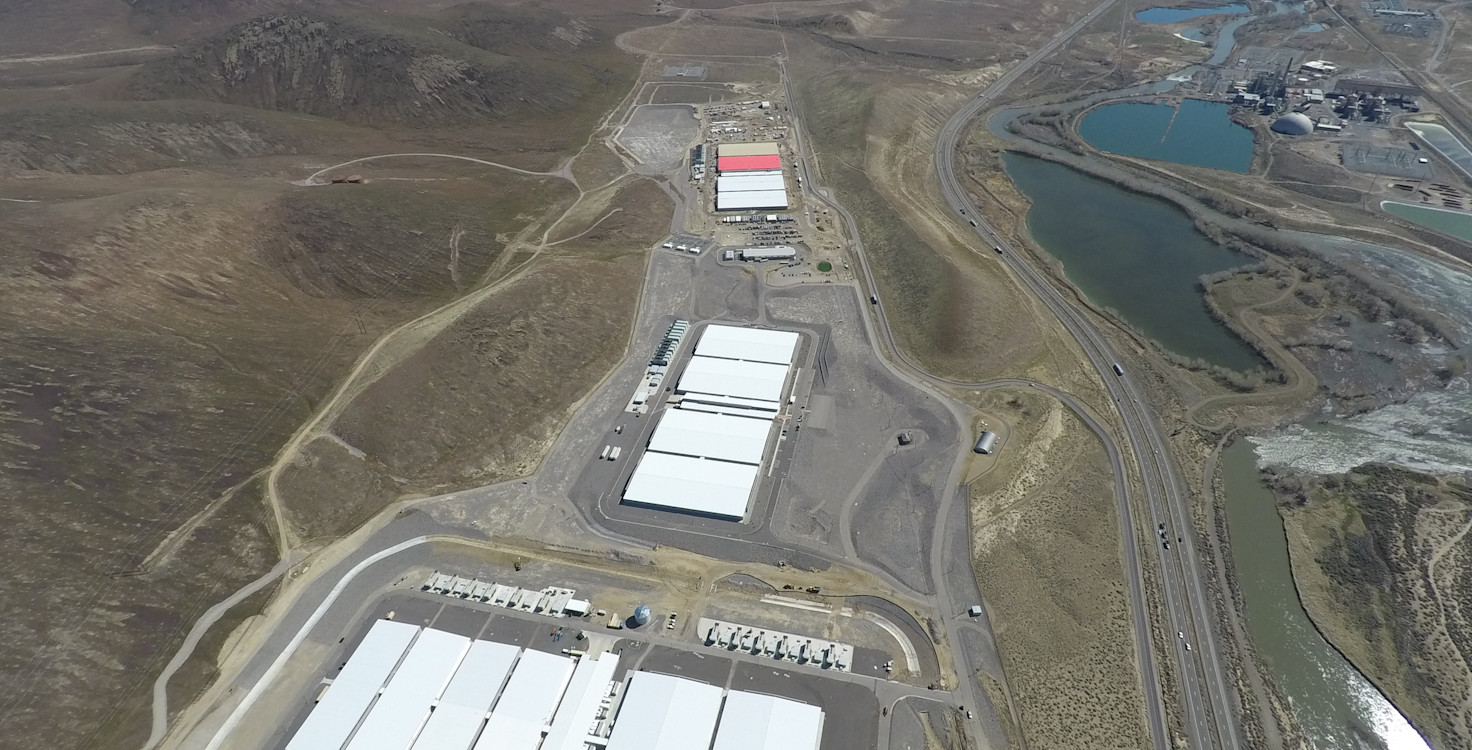
Agriculture accounts for around 70% of global freshwater withdrawals, of which animal agriculture is the biggest user, making it particularly vulnerable when water supplies come under pressure.
Research shows that as cities and other sectors demand more water, agriculture often bears the cost, with less water available for farming. Now, a new competitor is emerging.
The AI boom is increasing demand for land, energy and water, and the expansion of data centres into agricultural regions could have significant implications, from heightened competitive uses for water to greater exposure to chronic physical risks like drought.
For investors, these implications extend beyond individual companies or facilities. Water competition can force trade-offs and exacerbate risks in agricultural production, food supply chains and consumer markets.
This Insight piece explores whether the rapid expansion of AI infrastructure could amplify the financial risks of water stress1, drawing on examples from China and the United States (US), and what this could mean for diversified investment portfolios.
What connects agriculture, data centres and water?
Data centres require freshwater for cooling. While water recirculation and newer cooling technologies can reduce consumption at individual facilities, the scale of planned development could still significantly increase overall water demand in water-stressed regions.
Furthermore, a significant share of data centres' water footprint comes from indirect water use associated with electricity generation. In the US, for example, indirect water use by data centres is an estimated 12 times higher than on-site consumption. This means that efficiency gains at individual facilities are not necessarily enough to offset the cumulative demand from a rapidly expanding sector.
The implications are particularly significant when direct and indirect water demand from data centres expands into areas that also support agricultural production and rely on shared water sources. For instance, US data centres are rapidly expanding into rural areas: 67% of planned facilities are in rural areas, compared with 13% of those already operational, according to the Pew Research Center.
Drought and declining soil moisture can reduce crop yields and pasture productivity, increasing reliance on irrigation. When rainfall fails, producers turn to rivers and groundwater, the same water supply that AI infrastructure may also depend on.
FAIRR’s Water Risk Monitor model estimates that as of 2024, chronic water stress costs 18 of the world's largest listed livestock companies US$6.4 billion annually, with almost 90% stemming from reduced supply of drinking and service water for animals.
Growing demand from AI and animal agriculture could intensify competition and add to these costs, squeeze already tight margins and ultimately affect food prices and availability.
Case study 1: Inner Mongolia, China
Inner Mongolia, projected to rank among China’s most water-stressed provinces by the end of this century, offers one example of where the two sectors could compete for scarce resources.
The city of Ulanqab and surrounding areas represent an important agricultural and livestock production hub, particularly for forage crops, dairy, beef and sheep. Irrigated agriculture depends on reliable water supplies, while livestock farms require water for animal drinking, cleaning and cooling.
Major dairy producers China Mengniu and Yili, as well as their key raw milk suppliers, are headquartered in the region, and both companies already assess water risks across their sites.
Inner Mongolia Yili Industrial Group is headquartered in Hohhot. In 2025, the company identified that 35 of its processing facilities were in areas of high or extremely high water stress, while some 13% of the dairy farms operated by its core raw milk suppliers were situated in high water risk areas.
This supply chain exposure could increase in the future, given the region's ambitions to become a prime hub for AI data centres and computing power.
The city of Ulanqab, east of Hohhot, has secured agreements for 109 computing data centre projects, covering more than 7 million standard server racks, due to its renewable electricity, cold weather and available land.
According to the Ulanqab Municipal Statistics Bureau, agricultural water use dwarfed that of big-data businesses in 2025 - 62% of Ulanqab’s 470 million m³ of water (290 million m³) compared to 0.3% (1.54 million m³). However, water demand from data centres could rise substantially as more planned facilities come online and computing activity expands.
Cooling design and water sources will shape future demand. Regional regulations prohibit groundwater use for data centre cooling, and operators rely on outdoor air cooling for most of the year.
Officials estimate that approximately 30 million m³ of reclaimed water is still available annually for new users, including data centres. Reclaimed supply can reduce freshwater pressure, but dependable treatment and delivery remain essential.
Competition could intensify where facilities share constrained sources or face water rationing during droughts, particularly during hot, dry periods. For data centres, this could delay revenues or increase capital expenditure. Farms and food processors could face lower yields, higher feed costs and production interruptions, potentially weakening margins and debt-service capacity.
A historic precedent warrants consideration
There is already a local precedent of energy and agriculture competing for the same water. Daihai Lake, in Ulanqab, shrank from about 115 km² in 1989 to 52 km² in 2018, mainly because of groundwater pumping for irrigation and water drawn by a nearby power plant. In response, the local government returned farmland to wetland, with 16 livestock farms dismantled or relocated, while the power plant shifted its cooling system and started using reclaimed water for production.
While there is no evidence yet that data centres have displaced agricultural water in Inner Mongolia, the Daihai case shows that when water is reallocated, agriculture often bears the brunt, a risk that warrants further due diligence given the scale of planned development.
For investors exposed to both sectors, assessing shared basins and peak demand alongside issuer exposure, water supply contracts, access to alternative water sources and options to reduce water demand could be vital to understanding their potential downside risks.
Case study 2: Texas Panhandle, United States
The Texas Panhandle also illustrates the tension that can arise when there is growing competition for water, land and energy.
The region of northern Texas has an economy rooted in oil and gas and agriculture, primarily cattle ranching, beef processing and irrigated crops such as cotton, wheat and corn. It already faces significant water stress.
According to the Texas Water Development Board, irrigated agriculture accounts for approximately 95% of groundwater withdrawals from the Ogallala Aquifer, already exceeding its natural recharge. Consequently, crop production and livestock ranching depend heavily on groundwater and surface water.
These pressures are already visible at the company level. Tyson Foods cites decreasing water availability as an operational risk. It aims to develop site-specific water plans at 11 high-risk locations in the US. Of the seven plans it had completed by 2022, four were in Texas, including its Amarillo plant located in the Panhandle, which relies on the Ogallala Aquifer. FAIRR estimates Tyson’s chronic water stress costs represent 0.5% of revenue in 2024, against an EBIT margin of about 3%.
The wider US cattle industry has already seen climate pressures impact its supply chains. Drought reduces pasture and forage availability, forcing producers to purchase additional feed or reduce herd sizes. A smaller herd means fewer cattle available for slaughter, contributing to tighter supplies and all-time highs of beef prices for consumers.
A new competitor enters an already stressed water system
Against this backdrop, the Texas Panhandle is becoming a new frontier for AI infrastructure. The region currently has three operational data centres, with another 18 planned, as shown in Figure 1.
Among the proposed developments is Fermi America’s Project Matador, an AI data centre campus that would rank among the largest developments of its kind in the US and will draw on the Ogallala aquifer.
The project aims to generate up to 17 GW of power from natural gas, nuclear and solar energy, supported by battery storage. That is equivalent to almost a quarter of the average electricity demand across the Texas grid during its busiest week on record.
Figure 1: Operating and planned data centres within 50 miles of Amarillo, Texas
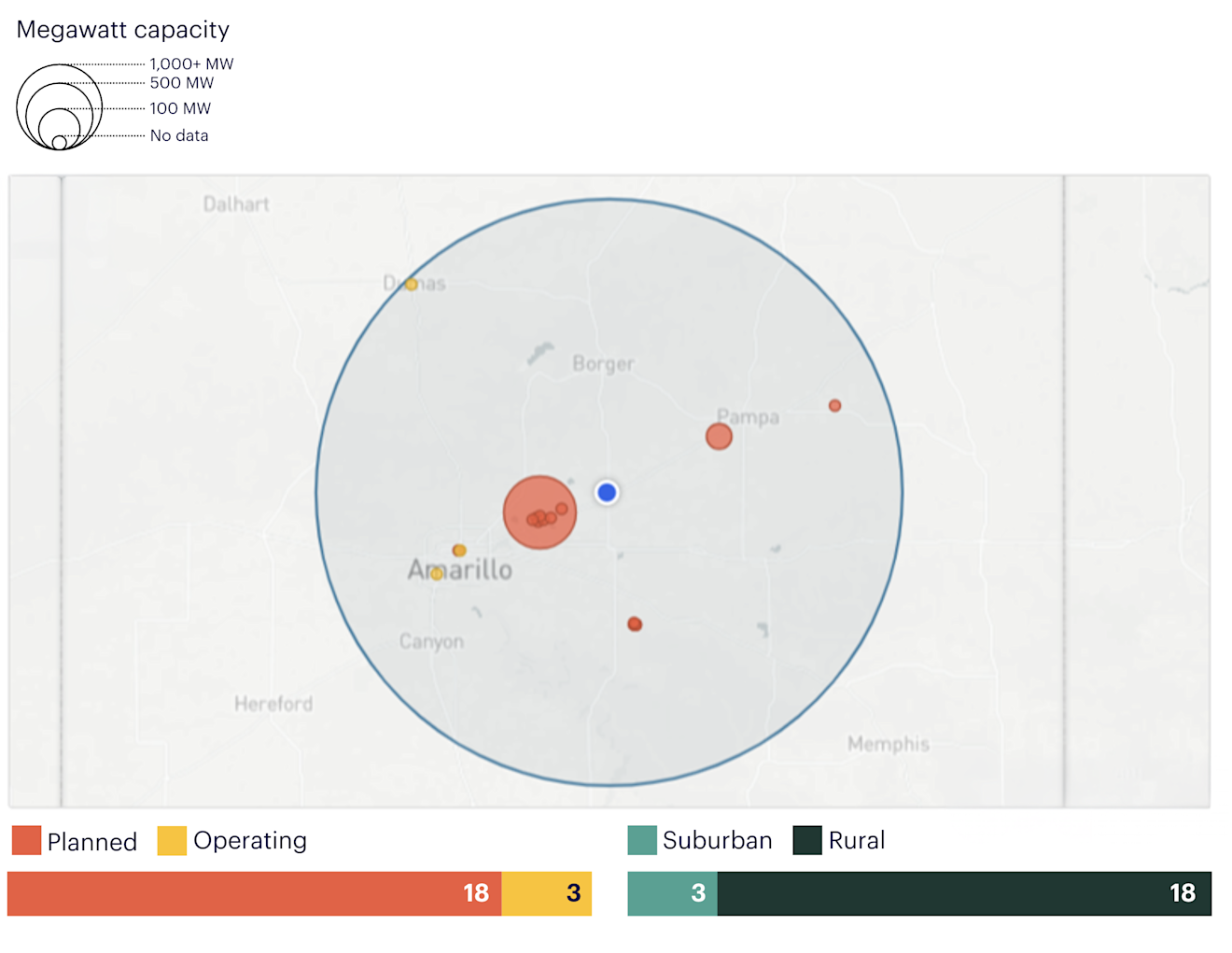
Sources: Data Center Map, Cleanview, Texas Tribune reporting, and Census Bureau data. Essig, C., & Mahajan, A. (2026, September 2). Find data centers near you in Texas with our search tools. The Texas Tribune.
Fermi America plans to use hybrid dry–wet cooling towers, which it claims could reduce evaporative water use by over 80% compared with conventional systems, and it is assessing reclaimed water to protect the Ogallala Aquifer.
These measures could reduce the project's water footprint, although the system is still being developed and the projected savings remain unverified.
University of Texas research from 2026 shows data centres could account for 3%–9% of total state water use by 2040, up from less than 1% today, with potential implications for agricultural yields, food security and long-term investor returns.
A shared resource, a shared risk
As FAIRR’s water research has shown, the resource remains underpriced and systemically undervalued, despite underpinning every stage of the food value chain.
Now, data centres are adding a new and rapidly growing source of demand, with much of their planned expansion taking place in the same water-stressed regions that support crop, feed and livestock production, as the cases of Inner Mongolia and the Texas Panhandle illustrate.
As water becomes scarcer and more expensive, food producers and processors – often running on thin margins – face rising operating costs and greater production pressures which may ultimately be passed to consumers or translate into reduced output, with implications for company profitability, food prices and security.
For diversified investors, growth in one sector cannot be viewed in isolation from its impact on others. Understanding which holdings and supply chains are drawing on the same water resources, where resource competition is emerging, and how the growing demand from AI infrastructure could compound existing risks to agricultural production will be key.
Notes:
[1] Water stress refers to a situation in which demand for freshwater exceeds available supply.
FAIRR insights are written by FAIRR team members and occasionally co-authored with guest contributors. The authors write in their individual capacity and do not necessarily represent the FAIRR view.
Written by

Senior Manager, China Programme

Senior Investor Outreach Manager

Technical Specialist, Climate and Nature