Animal welfare is rising on the agenda, for governments, companies and consumers. Poor practices can quickly translate into major headlines, and more importantly, financial risks.
Conversely, improved animal welfare and health support product quality, supply chain resilience and the mitigation of related risks, such as antimicrobial resistance (AMR), as well as improving trust and brand recognition among protein producers, food retailers and manufacturers.
The regulatory impetus for improving animal welfare in protein supply chains is strengthening in the UK, with implications beyond its borders. The Animal Welfare (Livestock Exports) Act 2024, which came into force in May 2024, was an important first step. This law made it an offence for businesses to export cattle, sheep, goats, pigs or horses from Great Britain for fattening or slaughter outside the UK.
Most recently, in December 2025, the UK government outlined its Animal Welfare Strategy. Among other things, the strategy sets out plans to phase out the use of cages for laying hens and farrowing crates for pigs and to improve welfare during transport and slaughter. Also impacting animal welfare is the new UK-EU agreement governing food safety, animal and plant health. In effect since May 2025, the UK-EU Sanitary and Phytosanitary Agreement will have major influence on standards for animal transport and animal product labelling.
For investors, these developments mark a critical moment: the regulatory perimeter is closing in on animal welfare. Farms and food producers that lack clear welfare commitments or operational readiness face growing legal, operational and reputational risks, as this Insight piece explores.
Recent cases demonstrate persistent business exposure
Recent real-world examples from the UK highlight how welfare failures can lead to swift and sustained financial consequences. On 12 May 2025, the UK pork producer Cranswick saw an almost-9% fall in its share price after evidence of animal cruelty and the use of banned killing methods prompted major retailers to suspend purchase and sale of pork from the supplier. Around US$514 million (£400 million) in market value was wiped out. Even eight months later, as of 12 January 2026, the stock has yet to recover and continues to trade near its 12 May 2025 low, underscoring the long-term nature of animal welfare-driven value erosion.
Elsewhere, an undercover investigation by Animal Equality at Cross Farm in Holsworthy, Devon – a supplier to a major UK retailer- revealed multiple serious welfare breaches, despite the farm being certified by the Red Tractor assurance scheme. Formal complaints to the Trading Standards and the Animal Plant and Health Agency are pending.
These incidents highlight how welfare gaps can cause severe reputational fallout, supply-chain disruption and legal repercussions, and how even certified farms continue to be exposed to major welfare failings.
Global overview: Welfare policy adoption widens, but gaps remain
Data from the latest Coller FAIRR Protein Producer Index shows encouraging progress in animal welfare, antibiotic use and zoonotic disease prevention among large, listed livestock producers, but also reveals the existence of major blind spots:
Companies with animal-welfare policies rose from 44% in 2019 to 86% in 2024, an impressive uptick showing increasing awareness of the material risk of failure to engage on this issue. Protein producers that still lacked a welfare policy in 2024, and those with weak policies, remain open to investor and regulatory scrutiny, however.
Those with an antibiotic-stewardship policy grew from 22% to 53% over the same period. Although this also shows improvement, nearly half of the Index companies remain exposed to investor and regulatory scrutiny.
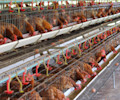
In egg and poultry production, cage-free commitments remain uneven. For example, US company Cal-Maine reported that only 29% of eggs were produced in cage-free systems in 2024, with no timeline to transition, while Vital Farms, an organic producer, operates entirely cage-free.
Transport and biosecurity
Among 50 land-protein producers, 82% specified measures to reduce disease and antibiotic use (see Figure 1), while 16% provided no explicit measures.
Figure 1: Percentage of companies taking measures to improve welfare and reduce antibiotics

Source: Coller FAIRR Protein Producer Index 2024
These figures show that while most companies recognise the link between animal welfare and health and AMR, nearly one in five provide no explicit disease reduction measures. This is significant.
AMR is increasingly recognised as a material risk for investors and as an important policy issue: in 2024, investors representing over US$13 trillion in combined assets urged policymakers to take immediate action to curb the spread of AMR.
Global leaders did commit to “meaningful reductions” in global animal antimicrobial use by 2030 at the UN General Assembly High-Level Meeting on antimicrobial resistance that followed, but as FAIRR’s Insight on the topic highlighted, this pledge falls short in driving meaningful action.
Live-transport commitments
In 2019, only 12% of Index companies committed to reducing animal transport times to 8 hours or less.
By 2024, the level of commitment had risen to 24% and a further 27% of businesses reported having specifications for animal health during transport, but 49% still offered no indication of taking measures to improve transport conditions or limit travel durations.
As live-export bans and stricter transport criteria become business-as-usual, nearly half of protein producers in FAIRR’s index remain exposed to legal and other risks. Furthermore, with the UK’s export ban now in force, transport limits will increasingly become a yardstick and potential barrier for companies with global supply chains.
The recent case of the Spiridon II highlights these risks. The vessel departed Uruguay in September, carrying nearly 3,000 cattle, of which half were pregnant. It was denied permission to unload the animals when it arrived in Turkey two months later, with animal welfare organisations increasingly concerned regarding the deteriorating conditions the cattle were kept in.
Studies have shown that transporting live animals is more expensive and carries a larger environmental footprint than transporting carcasses, while the improper disposal of waste or dead animals could contravene international marine protection agreements.
Why animal welfare matters for investors
Animal welfare has become a crucial investment issue as it creates related regulatory, reputational and operational risks that can directly affect company performance.
As governments introduce and enforce tighter rules on live exports, animal transport, caging systems and antibiotic use, companies without clear, enforceable welfare policies are vulnerable to non-compliance charges, operational disruptions and costly interventions such as farm suspensions.
At the same time, welfare failures can translate quickly into reputational and supply-chain shocks. The recent Cranswick case illustrates how serious breaches can trigger supermarket pushback, intense media scrutiny and immediate share-price pressure, with retailers and consumers becoming far less tolerant of poor practices.
Beyond external risk, there is also an operational and financial dimension: harmful welfare conditions are linked to lower animal fertility, slower growth rates and higher mortality, all of which erode productivity and profit margins. Research from organisations such as the Natural Resources Institute Finland and the UN Food and Agriculture Organisation shows that farms that improve welfare standards tend to see better animal health outcomes and higher profitability, reinforcing the investment case for proactive management of animal welfare risks.
Vigilance equals value
Animal welfare is no longer a niche sustainability concern. It is rapidly becoming a mainstream investment risk and opportunity. Regulatory change is already happening, incidents are exposing weak links in supply chains, while the data shows meaningful progress but persistent gaps.
For investors with exposure to protein producers, restaurants or food retailers and manufacturers, it is increasingly important to integrate animal-welfare risks into due diligence, engage proactively on policy targets, and monitor the operational compliance and supply-chain integrity of portfolio companies.
Doing so can reduce risk exposure, enhance resilience and support sustainable value creation in global food systems.
FAIRR insights are written by FAIRR team members and occasionally co-authored with guest contributors. The authors write in their individual capacity and do not necessarily represent the FAIRR view.
Written by

Analyst