New FAIRR research finds that some agri-food giants are showcasing strong governance, ambition, measurement and farmer support, but others still fail to do so. FAIRR identified commitments being quietly dropped, contradictory practices, and failure to measure and report outcomes or support farmers.
52% of companies identify reducing agrochemical inputs as a goal, yet many of the most widely deployed regenerative agriculture practices can still rely on herbicides in implementation. Despite this, no company has set a pesticide reduction target.
Only 4% of companies have set outcome-based targets despite 54% claiming they now measure regenerative agriculture outcomes. Even for GHG emissions, the easiest outcome to measure and report, only 24% of companies report progress, leaving investors unable to properly assess the credibility of corporate programmes.
Quantified regenerative agriculture targets have fallen from 35% of assessed companies in 2023 to just 28% in 2026.
(London, 29 June 2026) – The US$95 trillion-backed FAIRR investor network is today publishing new research revealing a widening credibility gap in how the world’s largest agri-food companies deploy regenerative agriculture. The report, Regenerative Agriculture: Moving from Ambition to Credibility, assesses 78 publicly listed agri-food companies* with combined revenues of US$3.3 trillion, comparing their progress against FAIRR’s landmark 2023 research.
The findings reveal that while positive steps have been taken by some companies – including improved measurement and broader climate strategy integration – corporate programmes are too often beset by contradiction and incomplete coverage. FAIRR warns that this is creating growing risks for investors attempting to assess long-term resilience across food supply chains amid mounting climate impacts and supply volatility.
Companies disclosing fewer regenerative agriculture commitments
The proportion of assessed companies setting quantified regenerative agriculture targets has fallen from 35% in 2023 to just 28% in 2026. Companies including Compass and JBS no longer disclose previously reported regenerative agriculture targets or have significantly revised their commitments, while six companies – among them Sodexo and Yum! Brands – no longer reference regenerative agriculture in their public disclosures.
FAIRR’s analysis suggests this trend may reflect a growing awareness of legal and reputational risk as scrutiny of sustainability claims intensifies globally. Companies that set targets they cannot demonstrate or substantiate face increasing exposure. However, where previously disclosed targets or commitments are no longer referenced, it raises important questions for investors around whether targets have been retired, revised or remain in place without updated public reporting.
Irrespective of the reason, reduced transparency around commitments and progress makes it more difficult for investors to assess the credibility and durability of corporate sustainability strategies.
Contradictions and pesticides undermine regenerative claims
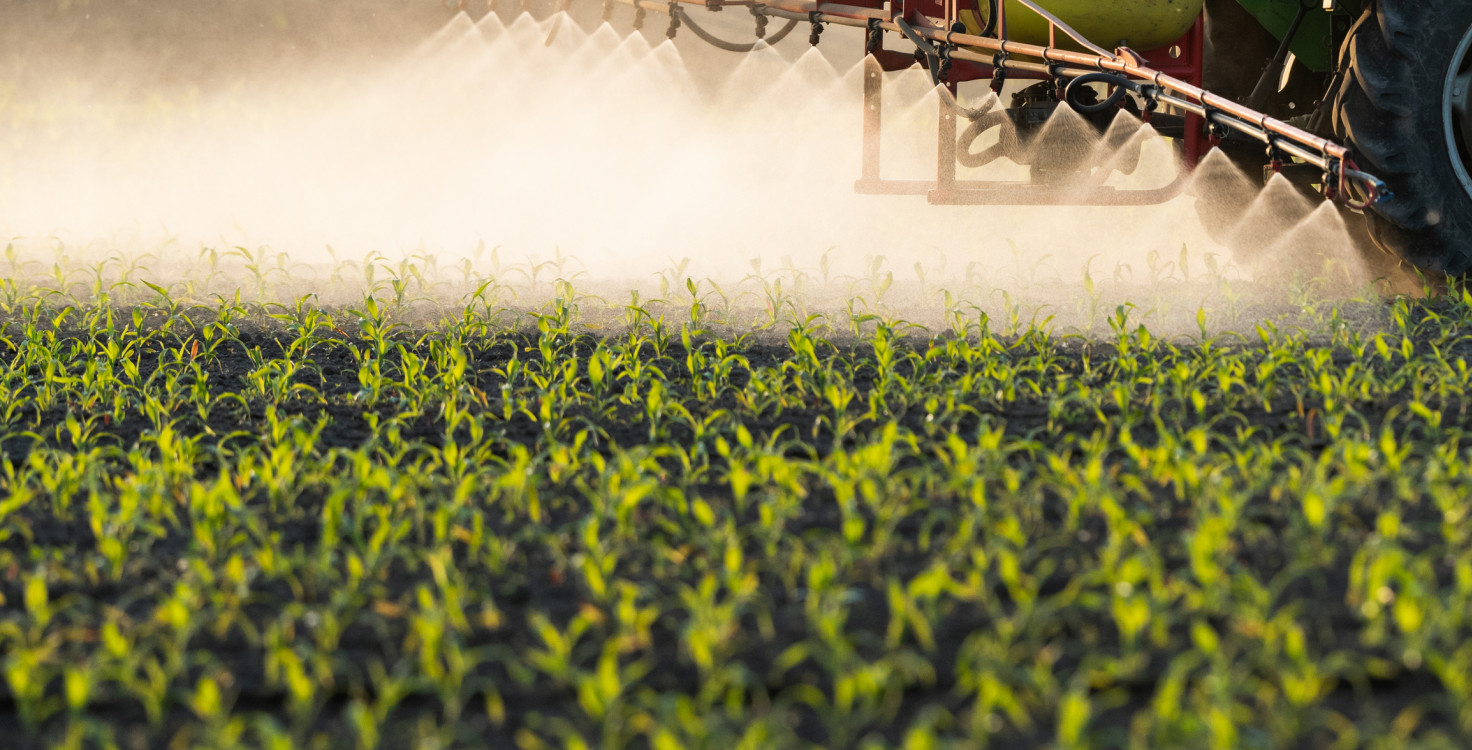
FAIRR has identified several growing contradictions between stated ambitions and practices being deployed within corporate regenerative agriculture strategies, highlighted by pesticide use. While 52% of companies identify reducing agrochemical use as a goal, many of the sector’s most widely adopted practices still depend on herbicides if not implemented alongside other practices. Cover crops are used by 68% of companies and reduced or no-till farming by 58%, both of which can be heavily reliant on herbicides. No company has set a target to reduce pesticide use as part of its regenerative agriculture programme. Only Conagra, Danone, Nestlé and Sysco are currently measuring herbicide use in their regenerative agriculture programmes at all. This disconnect between stated ambition and on-the-ground practice is a direct challenge to the credibility of corporate regenerative agriculture narratives, and risks exposing companies and their investors to reputational and regulatory risk as scrutiny of sustainability claims tightens.
Measurement progress cannot mask governance shortfall
There are some grounds for cautious optimism. The share of companies measuring regenerative agriculture outcomes has risen sharply, from 16% in 2023 to 54% in 2026. More companies are connecting regenerative agriculture to their Scope 3 emissions strategies: 52% now make a quantitative or qualitative link, compared to just 24% three years ago. However, most measurement remains at the project level rather than across company operations, making it difficult for investors to assess the true scale and impact of programmes and whether they really support supply chain resilience. Only 4% of companies have set outcome-based targets – defining what they aim to achieve, rather than how many acres they will farm regeneratively – despite 54% claiming they have begun to measure outcomes.
Some company strategies showcase ‘best practice’
Scalable, impactful corporate sustainable agriculture initiatives, including regenerative agriculture, are long-term projects that are difficult to measure, but some companies are putting in place strategies that show that this can be achieved. From Carrefour’s acknowledgement of the financial materiality of soil health, biodiversity, water, climate resilience and adequate wages to General Mills’ clarity on the scope of its programme and PepsiCo’s outcome-based farmer payment schemes, there are plenty of examples of companies building credibility and trust on some aspects of their initiatives. Areas of focus to build credibility include:
Integration of regen ag to climate and nature transition plans and governance, acknowledging the financial materiality of agricultural land degradation.
Clarity on the scope of initiatives and which outcomes they are likely to contribute to.
Establishing a grounded discussion in disclosure and discussions with stakeholders on ambitions and whether initiatives will tackle those. Trade-offs are inevitable, but companies can transparently discuss them.
María Montosa Ródenas, Technical Specialist, Research & Engagements – Nature, FAIRR, said:
"Regenerative agriculture has real potential to help agri-food companies build resilience against climate and nature-related risks. But potential is not the same as progress. Our research shows that corporate strategies remain fragmented and under-resourced. The pesticide contradiction at the heart of many programmes is particularly striking: companies cannot credibly claim to be restoring nature while deploying practices that undermine that goal. Investors need to push for outcome-based targets and company-wide reporting, or the regenerative agriculture opportunity will remain largely unrealised.””
Arthur van Mansvelt, Senior Engagement Specialist, Achmea Investment Management, added:
“Many agrifood businesses present regenerative agriculture as a silver bullet to meet climate and nature goals. But, as investors, we are still struggling to assess the credibility of initiatives. We need to have clarity on how companies use regenerative agriculture to contribute to achieving global nature goals. And farmers need fair compensation for the extra efforts and risks, particularly in the context of geopolitical instability and price volatility. The quality of the approach, implementation and disclosure will ultimately be the driver of long‑term profitability.”
Notes to editor
*The report, Regenerative Agriculture: Moving from Ambition to Credibility, is available at www.fairr.org. It assesses 78 publicly listed agri-food companies with combined annual revenues of US$3.3 trillion and a market capitalisation of US$5.7 trillion, building on FAIRR’s 2023 research, The Four Labours of Regenerative Agriculture. Unless stated otherwise, data is comparable between 2023 and 2026; 2026 information reflects disclosures available as of 30 April 2026.
The proportion of companies referencing regenerative agriculture as an opportunity in their disclosures is 50 out of 78 (64%) in 2026. Most findings in the report refer to this cohort, unless otherwise stated.
Media contact
For more information, including interviews and further comment, please contact:
Ino Rousselet, ESG Communications (Part of the Flag Group)
Contact number: +44 77 8614 8010 | e: ino.rousselet@flag.co.uk
About FAIRR
The FAIRR Initiative is a global investor network, founded by Jeremy Coller, with a membership representing US$95 trillion in assets under management. FAIRR works with institutional investors to define the material risks and opportunities linked to intensive animal agriculture and provides investor members with the research, tools and engagements necessary to integrate this information into their asset stewardship and investment decisions. Visit www.fairr.org.